
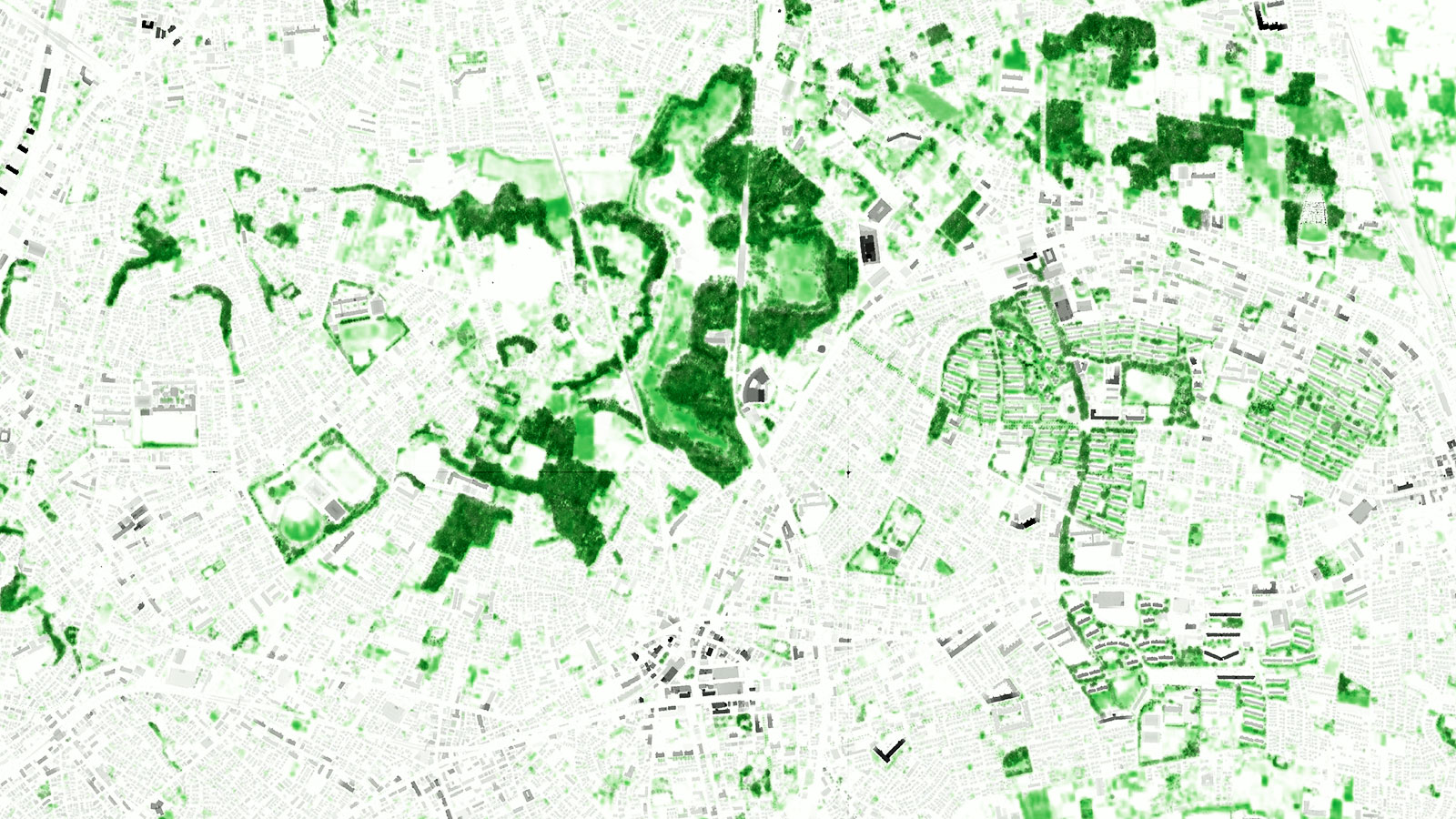
緑地、景観の質、気候条件などが、人々の精神的・身体的健康、認知機能、日常行動にどのように関係するかを検討しています。これまでに、高齢者を対象とし、抑うつ、慢性疼痛、認知症、歩行行動などの健康指標との関連を、地理情報や縦断データを用いて分析してきました。都市・地域環境の質を通じた健康維持・増進の可能性を明らかにすることを目的としています。
詳細
自然環境および気候条件が健康に与える影響について、主として高齢者を対象に検討してきました。個人の行動や生活習慣に加えて、居住地周辺の環境特性に着目し、地理情報と大規模な縦断データを用いた分析を行っています。
緑地環境に関する研究では、緑地の量や種類が抑うつと関連することが示されており、その関連は都市部と農村部で異なる可能性が示唆されています(Nishigaki et al., 2020)。また、緑地と気候条件を同時に考慮した研究では、緑地環境が慢性疼痛や慢性広範痛と関連することが報告されており、自然環境の影響が精神的健康にとどまらず、身体的症状にも及ぶ可能性が示されています(Yamada et al., 2025)。
景観の質や「美しさ」といった主観的な環境評価に関しては、近隣環境の美観が脳構造や認知機能と関連することが報告されており、自然環境が心理的評価を介して認知機能と関係している可能性が示されています(Tani et al., 2023)。
また、気候条件や天候が日常行動に与える影響にも着目しています。悪天候時には歩行量が低下する傾向がみられる一方で、商業施設などの屋内空間を利用することで、その影響が緩和される可能性が示されました(Yoshida et al., 2025)。この結果は、自然環境と人工環境の相互作用が、日常行動の維持において重要であることを示唆しています。
都市・空間デザインへの適応
自然・気候環境を健康の観点から都市・空間デザインに組み込む際の基礎的なエビデンスを提供します。緑地を単に面積として確保するのではなく、居住地周辺で日常的に接触可能な配置や、都市構造との関係性を考慮した計画が重要であることが示唆されます。また、景観の質や視覚的な快適性を含めた環境設計は、心理的評価だけでなく、認知機能との関連も踏まえて検討する必要があります。
さらに、気候条件や天候による行動制約を考慮すると、屋外空間のみならず、屋内および半屋外空間を含めた連続的な空間構成が重要となります。悪天候時にも外出や身体活動を維持できるよう、商業施設や公共空間などを組み合わせた都市・建築デザインが求められます。これらの視点は、健康を考慮した都市デザイン、空間デザイン、建築デザインを検討する際の設計条件として活用することが可能です。
Overview
This research area examines how natural and climatic environments—such as green spaces, landscape quality, and weather conditions—are associated with mental and physical health, cognitive function, and daily behaviors. Focusing primarily on older adults, we analyze associations with health indicators including depression, chronic pain, dementia, and walking behavior using geographic information and longitudinal data. The aim is to clarify the potential of urban and regional environmental quality to support health maintenance and promotion.
Description
We investigate the health effects of natural environments and climatic conditions, mainly among older populations. In addition to individual behaviors and lifestyles, we focus on environmental characteristics surrounding residential areas and conduct analyses using geographic information and large-scale longitudinal datasets.
Studies on green environments have shown that the amount and type of green space are associated with depression, and that these associations may differ between urban and rural settings. Research that jointly considers green space and climatic conditions has also reported associations with chronic pain and chronic widespread pain, suggesting that the influence of natural environments extends beyond mental health to physical symptoms.
We further examine subjective evaluations of the environment, such as perceived neighborhood beauty. Previous studies have reported associations between neighborhood aesthetics, brain structure, and cognitive function, indicating that natural environments may be related to cognition through psychological appraisal.
In addition, we analyze how weather and climatic conditions affect daily behaviors. While adverse weather is associated with reduced walking, the use of indoor spaces such as shopping malls may mitigate this effect. These findings suggest that interactions between natural and built environments play an important role in sustaining daily activities.
Implications for Urban and Spatial Design
This research provides empirical evidence for incorporating natural and climatic environments into urban and spatial design from a health perspective. Rather than securing green space solely in terms of area, planning should consider everyday accessibility around residential locations and its relationship with urban structure. Environmental design that accounts for landscape quality and visual comfort should also consider potential associations with cognitive function, in addition to psychological well-being.
Moreover, given behavioral constraints imposed by climate and weather, it is important to design continuous spatial configurations that integrate outdoor, semi-outdoor, and indoor spaces. Urban and architectural designs that combine public spaces with commercial and other indoor facilities may help maintain outings and physical activity even under unfavorable weather conditions. These perspectives can serve as design considerations for health-oriented urban, place, and architectural design.