行動の変化を、日常の中で継続・波及させるために、「行動のきっかけづくり」と「継続を支える仕組みづくり」を組み合わせたデザインを目指しています。歩行を促すサインや地域資源を可視化する案内、健康メッセージの提示などを、場所の文脈や利用者属性に応じて統合しています。
TOKIWALK では、団地内外の緑地と歩行環境を地域資源として捉え、ウォークラリーや歩幅計測を組み込んだ歩行環境を整備するとともに、体験イベントやワークショップ、住民サポーターの育成を組み合わせることで、参加のハードルを下げつつ継続参加と多世代交流を支える枠組みを構築しています。
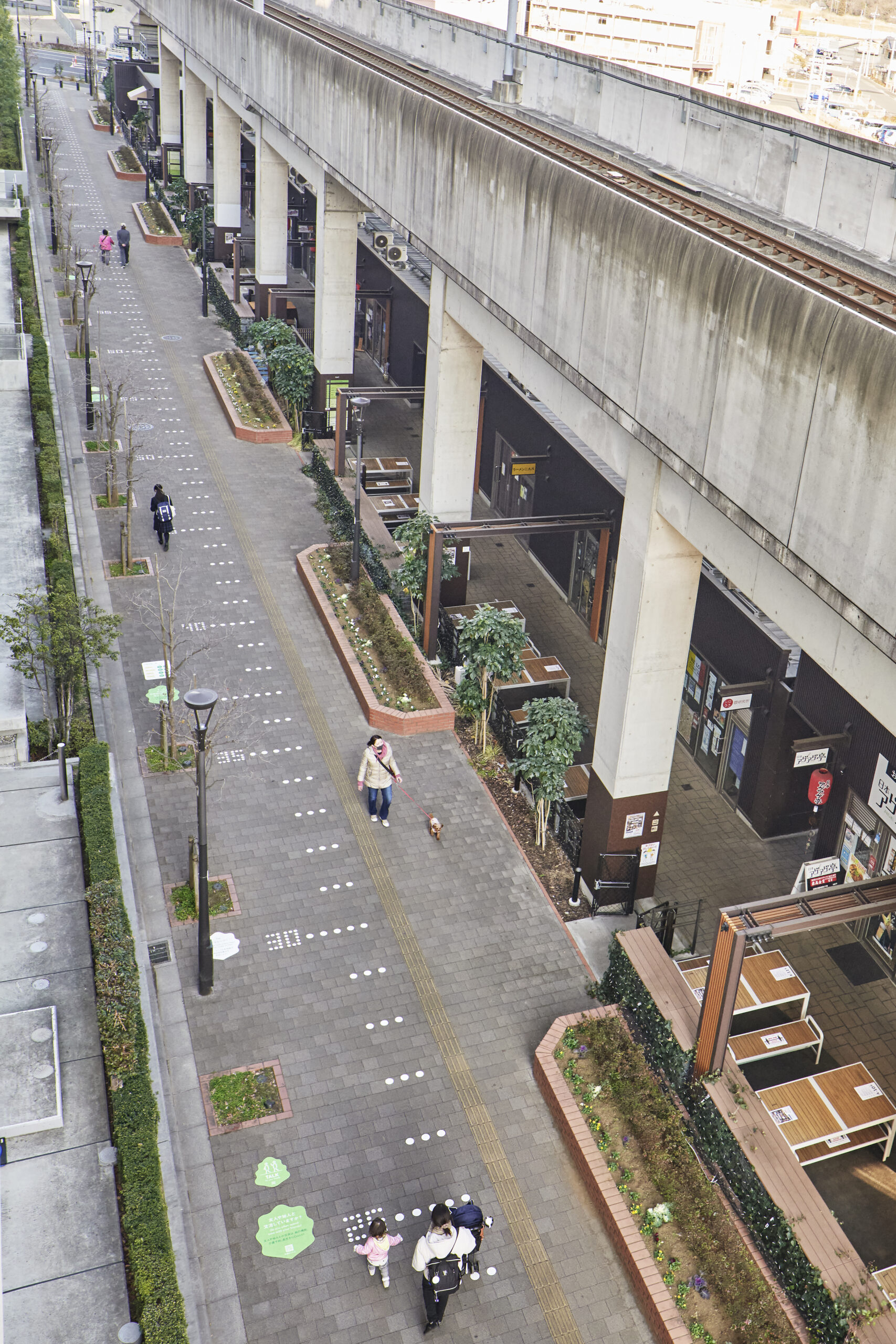
柏の葉では、歩きやすいまちづくりの共通理解を形成するためのガイドラインを策定し、その内容を実空間で体感できる距離表示サインや健康への気づきサインとして歩行者専用道に実装しています。墨田区やいなべ市における取り組みでは、健康メッセージやナッジを空間デザインに組み込み、行政施策や地域資源と連動させた実装を行っています。
都市・空間デザインへの視座
既存の動線や拠点、公共空間を活用しながら、行動と健康への気づきを支える点に特徴があります。介入を配置する動線や目的地の選定、視認性と理解しやすさ、計測や参加を支える仕組み、運用主体との連携が重要な設計要素となります。これらの考え方は、公共空間、地域拠点、商業施設、団地再生など、多様な場面に適用可能です。
Overview
This area integrates research, design, implementation, and evaluation to create “places” (e.g., public spaces and community hubs) that encourage everyday healthy behavior, awareness, social interaction, and place attachment. Rather than relying on large-scale urban change, we emphasize small, context-sensitive interventions in existing spaces.
Detail
To move beyond one-off events and support sustained and diffused behavioral change, we combine triggers for action with mechanisms that enable continuity. Interventions may include walking prompts, measurement systems, wayfinding that visualizes local resources, and health messages, integrated according to local context (natural features, circulation, destinations, and user characteristics).
In TOKIWALK, greenery and walkable routes in and around a housing complex are treated as local assets. The project combines QR-based checkpoints and stride-length measurement with experiential events, workshops, and resident supporters to reduce participation barriers while encouraging continued involvement and intergenerational exchange.
In Kashiwa-no-ha, guidelines were developed to build a shared understanding of walkable design, and implemented through distance markers and health-awareness signage along pedestrian corridors. In Sumida and Inabe, health messages and nudges are embedded into spatial interventions and coordinated with local government services and community resources.
Perspective for Urban / Spatial Design
Place Design leverages existing routes, hubs, and public spaces to support behavior and health awareness. Key design considerations include selecting routes and destinations for interventions, ensuring visibility and interpretability, building participation and measurement mechanisms, and collaborating with organizations responsible for operation. These principles can be applied across public spaces, community facilities, commercial settings, and housing renewal projects.
Related Projects
- TOKIWALK: Walking-based Community Health Program(歩行を基軸とした地域健康プログラム)
- WALK & HEALTH KASHIWA-NO-HA: Walkable Street Design with Health Signage(健康への気づきを促す歩行回廊デザイン)
- SUMIDA Health Resources Wayfinding System(健康資源 知る・歩くサイン)
- INABE Step: Nudge-based Walking Design(ナッジによる歩行促進デザイン)